





















What Is Push Traffic Media Buying and How to Work With It Effectively?


Summary:
- Push traffic buying: acquiring users via push notifications and monetizing through CPA offers; ads appear directly on devices.
- How it works: ad networks deliver to subscribed users; set creatives, geo/device/OS/language filters, bids; pricing is CPC-based.
- Main networks: PropellerAds, RichPush, Zeropark, Push.House, Evadav, Adsterra; platforms differ by inventory quality, freshness, and moderation strictness.
- Verticals: sweepstakes, dating, nutra, antiviruses/cleaners, iGaming, finance/loans, crypto tools/wallets; simple funnels and clear terms matter.
- Formats compared: Classic Push vs In-Page Push vs ClickUnder — opt-in differences, volume trade-offs, and higher complaint/moderation pressure when funnels mislead.
- Execution: launch steps, tools (Voluum/Keitaro/Binom, Adplexity/Anstrex, landing builders), split testing, key metrics (CTR/CR/ROI/eCPC/Zone ID/freshness), risks, legal/policy boundaries (GDPR/CCPA), and scaling via repeatable winners.
Definition
Push traffic media buying is a CPC-based acquisition method where advertisers buy push-notification clicks through ad networks and monetize via CPA offers. In practice, buyers pick a vertical and offer, build a creative set, segment targeting, track with tools (e.g., Voluum/Keitaro/Binom), cut weak zones early, and rotate creatives to prevent fast burnout. The article emphasizes compliance and transparent landers to reduce bans, reversals, and policy issues while scaling repeatable setups.
Table Of Contents
- What Is Push Traffic Media Buying and How to Work With It Effectively?
- How Does Push Traffic Media Buying Work?
- What Are the Main Push Traffic Networks?
- What Niches Convert Best on Push Traffic?
- What’s the Difference Between Classic Push, In-Page Push, and ClickUnder?
- How to Launch a Profitable Push Campaign?
- What Tools Are Used in Push Media Buying?
- Staying Compliant and Reducing Ban Risk in Push Networks
- What Are the Risks of Push Arbitrage?
- What’s the Legal Status of Push Traffic?
- How to Split-Test Push Campaigns Properly?
- What Budget Do You Need to Start?
- What Traffic Quality Metrics to Monitor?
- Common Problems and How to Fix Them
- Policy Boundaries and Practical Safety Notes
What Is Push Traffic Media Buying and How to Work With It Effectively?
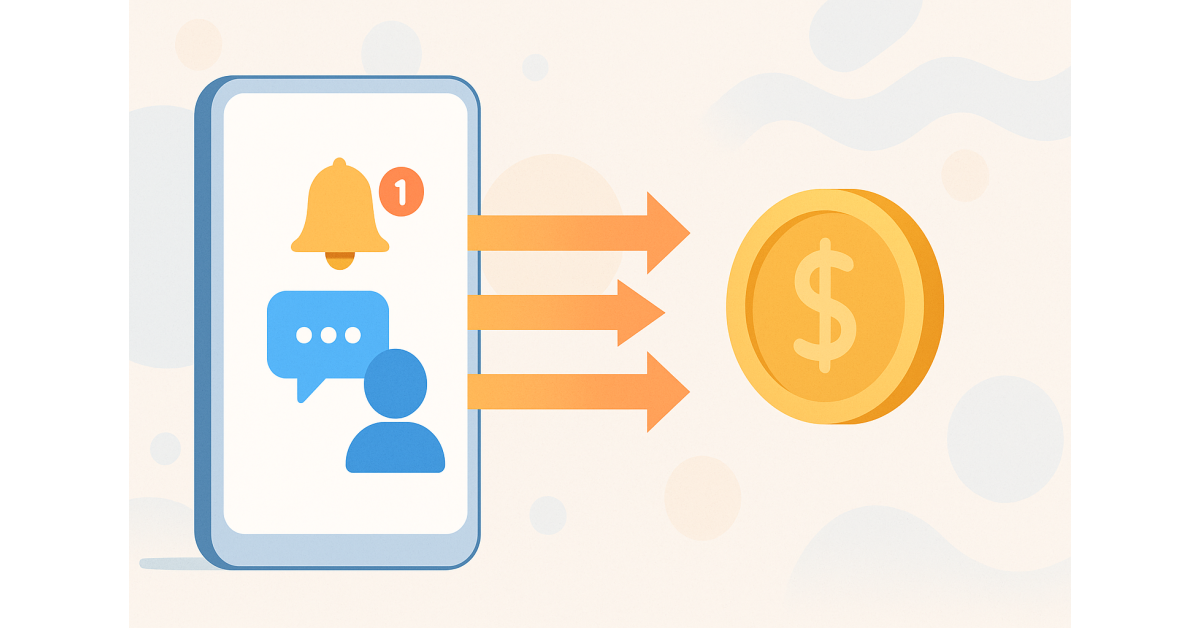
Push traffic media buying is a paid acquisition method where advertisers deliver promotional content through push notifications. These are clickable messages that appear directly on users' devices — desktops or smartphones — even when they're not actively browsing a website. This channel has gained popularity in affiliate marketing, particularly for performance teams that run fast test cycles and iterate creatives aggressively.
If you want a clean baseline before going into push specifics, start with a foundational overview of how media buying and arbitrage mechanics work end to end — budgets, funnels, tracking, and profit logic in 2026: a practical breakdown of how media buying works in 2026. It will make the push workflow below much easier to interpret.
NPPR TEAM SHOP supports media buyers working with push traffic by providing resources, tools, and accounts optimized for high-volume testing and scaling.
How Does Push Traffic Media Buying Work?
Push traffic buying operates through ad networks that broker space for push notification campaigns. Advertisers set up creatives, bids, geo-targeting, and device filters, and the network delivers ads to subscribed users' devices.
This model is CPC-based (cost per click), with traffic volume driven by network reach and targeting efficiency. The key is to maintain relevance to avoid ad fatigue and click blindness.
What Are the Main Push Traffic Networks?
Push ad networks act as intermediaries between publishers (who collect subscribers) and advertisers (who run campaigns). The top players include:
- PropellerAds
- RichPush
- Zeropark
- Push.House
- Evadav
- Adsterra
Each platform varies in inventory quality, targeting granularity, traffic freshness, and moderation strictness. Always verify what a network allows for your vertical before you scale spend.
What Niches Convert Best on Push Traffic?
Some verticals show consistently strong ROI on push traffic when the funnel is simple and the promise matches the landing:
- Sweeps (sweepstakes)
- Antiviruses / system cleaners
- Dating
- Nutra (health supplements)
- iGaming
- Finance / Loans
- Crypto tools / wallets
The practical rule: the "hotter" the vertical, the more important compliance, transparent landing terms, and honest creative framing become. Push can scale fast, but it punishes sloppy claims and mismatched funnels even faster.
What’s the Difference Between Classic Push, In-Page Push, and ClickUnder?
| Format | Description | CTR | Volume |
|---|---|---|---|
| Classic Push | System-level notifications (Android, desktop browsers) | High | Medium |
| In-Page Push | Looks like a push, but works like a native ad on websites | Medium | High |
| ClickUnder | Opens a landing after a user click on the publisher site | Very High | Low to Mid |
Classic push requires user opt-in, while in-page and clickunder typically don’t — which often increases volume but can also increase complaints and stricter moderation pressure if the funnel feels misleading.
If you’re choosing between push and other "mass volume" sources, it helps to understand how teaser networks behave in practice: creative hooks, moderation tolerance, typical lead quality, and what a scalable teaser funnel looks like. Here’s a focused teaser-network arbitrage playbook for media buyers you can use as a reference when deciding where to test and where to scale.
How to Launch a Profitable Push Campaign?
To launch a converting push media buying campaign:
- Choose vertical & offer (via CPA network or direct deal)
- Prepare creative bundle: icon, headline, body, URL
- Segment geo, device, language, OS
- Test with a smart budget ($50–200 depending on tier)
- Track everything (via Voluum, Binom, Keitaro)
- Optimize by zone, carrier, OS version
- Scale only what repeats (whitelists / similar placements if available)
For high-volume work, consistency matters: stable tracking, clean naming, controlled testing rules, and a disciplined creative refresh cadence. NPPR TEAM SHOP provides access to resources that support this workflow.
Creative Message Match: Push Copy Patterns That Improve CTR Without Triggering Compliance
Most push campaigns die from a mismatch: the notification promises one thing, and the first screen delivers another. Your goal is message match in 3 seconds: the user should instantly recognize the same idea on the landing above the fold.
High-performing structure for push copy:
- Hook (1st line): concrete outcome or problem ("Your phone is slowing down…") instead of vague hype.
- Proof cue: soft validation ("Check status", "See results") — avoid absolute claims that invite moderation.
- Action: simple CTA ("Open", "Verify", "Get access") aligned with the landing button.
Operationally, keep a creative refresh queue: 10–15 variants per angle (icon/title/body) and rotate every 48–72 hours, but change one element at a time to learn what moved CTR or CR. If you run "hot" verticals (dating, finance, iGaming), add visible terms/disclaimers on the first screen — it reduces complaints and improves account longevity without killing conversion when the offer is framed honestly.
What Tools Are Used in Push Media Buying?
Essential tools for push traffic buyers:
- Trackers: Voluum, Keitaro, Binom
- Spy tools: Adplexity Push, Anstrex
- Landing generators: Landingi, Purelander
- Analytics / QA: zone performance rules, lead validation, CRM feedback loops
These tools allow traffic measurement, conversion tracking, structured split testing, and scaling without losing attribution.
Staying Compliant and Reducing Ban Risk in Push Networks
The most reliable way to "stay alive" is not tricks — it’s consistency and compliance. Push networks and CPA partners increasingly enforce policies around misleading claims, hidden conditions, and low-quality traffic. Make sure your creative promise matches the landing first screen, and that the landing clearly shows terms, price where relevant, and support/refund information.
Operationally, keep a simple checklist: one offer per test set, one landing version per hypothesis, clear UTM/token structure, and a daily review of zone quality. This reduces waste and prevents accidental policy violations.
What Are the Risks of Push Arbitrage?
Running push campaigns at scale includes the following risks:
- Account bans / campaign rejections (policy issues, complaints, or repeated low-quality zones)
- Payment delays or reversals by CPA networks (lead quality issues)
- Domain or landing restrictions (misleading content or policy mismatch)
- Low-quality leads / chargebacks
Mitigation strategies:
- Validate lead quality early (postbacks + CRM checks, not only clicks)
- Cut weak zones fast and expand from proven ones
- Keep the funnel transparent and consistent with ad claims
- Rotate creatives on schedule to avoid fatigue-driven drops
What’s the Legal Status of Push Traffic?
Push advertising itself is legal, but the content and data handling may breach:
- GDPR / CCPA (data collection & user consent)
- Network policies (misleading offers, hidden terms)
- Local laws (e.g., deceptive marketing, restricted vertical rules)
Avoid misleading creatives, clearly disclose conditions, and always check offer and network compliance requirements.
How to Split-Test Push Campaigns Properly?
Proper split testing ensures campaign profitability.
- Test creatives (icon + title + body)
- Split landing pages (one change at a time)
- Segment traffic zones (publishers)
- Evaluate device performance
- Check time-of-day/day-of-week patterns
Use dynamic tracking tokens and label winning elements. Push campaigns often decay within 48–72 hours — be fast with data and strict with decision rules.
Data-Driven Push Testing: How to Set Stop Rules and Avoid False Winners
Push is volatile, so the biggest leak is not "bad traffic" — it’s wrong decisions on small samples. Before launch, define a simple decision frame: what is a "test", how long it runs, and when you cut it. A practical baseline:
- Window: evaluate initial performance after 100–300 clicks per segment (geo+device+format) — earlier signals are often noise.
- Breakeven CPA: calculate max allowable CPA from payout and target margin (e.g., payout $30, target ROI 20% → breakeven CPA ≈ $25). Keep it visible in your tracker dashboard.
- Stop rules: if a zone spends 2–3× your breakeven CPA without a conversion — blacklist. If CTR is below your channel norm for that geo, rotate creative first.
To avoid "false winners", don’t scale on one lucky conversion. Look for repeatability: the same creative angle producing stable CR across multiple zones or at least across 2–3 days. If you have post-CRM feedback, optimize to approved/paid conversions, not just raw leads.
What Budget Do You Need to Start?
Minimal budget for tier 3 push: $150–300
For tier 1 (US, CA, UK): $500+
Budget should cover:
- Ad spend
- Tracker fees
- Landing page hosting
- Creative production
- Retests (because volatility is part of the channel)
Push is cost-efficient but volatile — budget must include testing, not just scaling.
What Traffic Quality Metrics to Monitor?
Key metrics in push traffic:
- CTR (Click Through Rate): Ideal >1.5%
- CR (Conversion Rate): Depends on vertical
- eCPC (effective CPC)
- ROI
- Traffic freshness (new vs recycled users)
- Zone ID performance
Networks provide zone reports — cut underperforming ones early.
Common Problems and How to Fix Them
| Problem | Solution |
|---|---|
| Low CTR | Refresh creatives, test new angles, improve the first 3–5 words |
| High CPC | Focus spend on proven zones, tighten targeting, improve creative relevance |
| Low lead quality | Add qualification on the first screen, validate leads, cut low-quality zones |
| Offer not converting | Change offer, adjust landing message match, test a simpler funnel |
| Fast burnout of traffic | Rotate creatives every 2–3 days and keep a refresh queue ready |
Push traffic burnout is fast. Monitor and iterate daily.
Policy Boundaries and Practical Safety Notes
If your workflow depends on deception or hiding content from reviews, it will eventually collapse into bans and payment holds. The sustainable approach is to build compliant funnels, keep claims realistic, and treat push like a high-velocity testing channel where discipline and documentation win over "one-off tricks."

Keyword selection for Google Ads media buying 2026 without wasted spend
2026 reality check for keyword selection in Google AdsIn 2026, winning keyword selection for media buying in Google Ads is...

How to separate the funnel: forms, calls, chats — and not lose attribution in Google Ads?
Why separate funnels for forms calls and chatsSplitting your funnel by contact method gives transparent attribution and cleaner optimization signals....

How do gamers use Discord: raids, game rooms, and partner searches?
Why gamers rely on Discord so much in 2026In 2026 Discord is less a "voice app" and more the infrastructure...


