





















Bindings and identity: email, phone, 2FA, family sharing, device trust — what really "holds" an account


Summary:
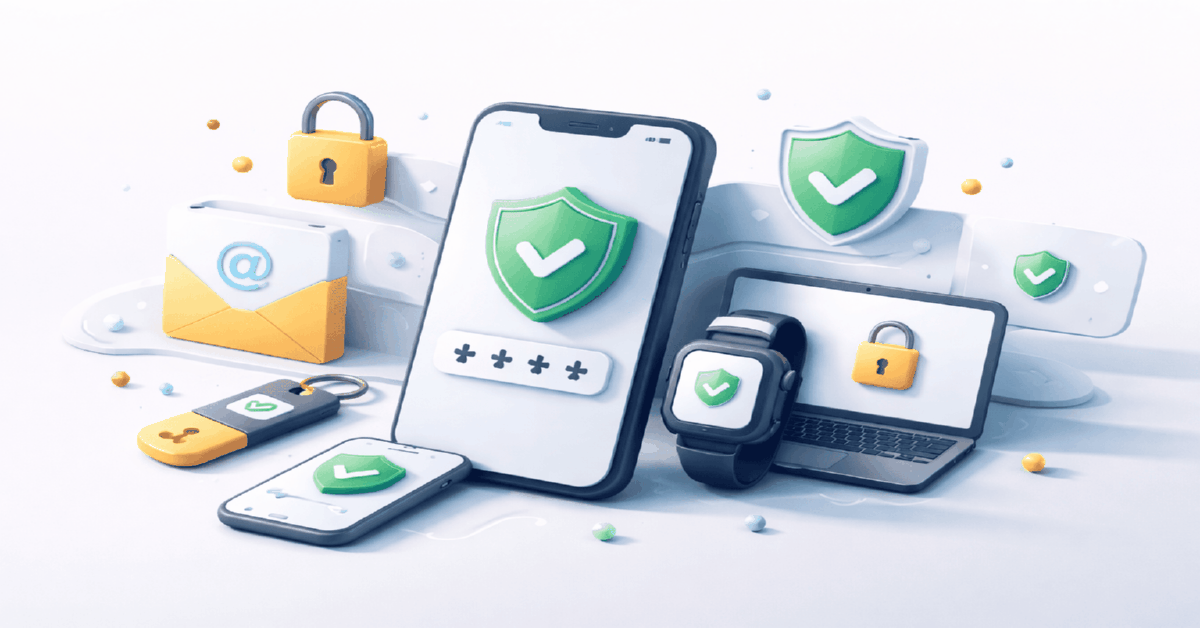
- In 2026 an account is stabilized by an identity bundle: root email, phone recovery, 2FA, device trust, and links like family sharing; abrupt changes can trigger checks and logouts.
- The "identity graph" idea: consistent signals reduce friction; changing several anchors at once can cause verification and temporary restrictions.
- Email is the root identifier and recovery hub; weak mailbox control turns device or 2FA issues into downtime.
- Phone can help or become a single point of failure; resilience comes from backup codes, an authenticator app, a hardware key, and a trusted device.
- Device trust relies on cookies/refresh tokens, login history and behavior; wiping a "clean browser" deletes trust anchors. Family sharing creates a rights layer and can break libraries/subscriptions due to time, region, or change limits.
Definition
Account stability in 2026 is managed as an "identity graph": access is reinforced by a controlled root email, recovery rails, 2FA, trusted devices, behavioral continuity, and entitlements like family sharing. In practice you stabilize the mailbox first, set 2FA with backup paths, preserve device trust, and stage changes using the risk-matrix logic (avoid multi-anchor swaps). The payoff is fewer step-ups and less downtime during campaigns.
Table Of Contents
- What actually "holds" an account in 2026: thinking in an identity graph
- Why your email is not "just contact info" but the root identity
- Is a phone number a safety net or a single point of failure?
- 2FA is the gate, but which gate fits a team workflow?
- How device trust works and why it can matter more than your password
- Family sharing and entitlement links: identity is also about rights
- Table: what holds an account strongest and where it breaks most often
- Which changes trigger checks the hardest?
- Risk matrix: planning changes to avoid operational downtime
- Under the hood: the trust engine and non-obvious 2026 details
- What is the minimal setup that stays stable without overcomplicating team work?
- How to explain access risk to leadership in business terms
In 2026, an account is rarely "held" by a password alone. What really keeps it stable is an identity bundle: the primary email as the root identifier, the phone number as a recovery rail, 2FA as the access gate, device trust as an invisible "passport" for sessions, and social or entitlement links like family sharing. For media buyers and digital marketers, this is not abstract security talk. A poorly planned change can trigger step-up checks, log out the whole team, freeze payments, cut limits, or lock critical tools during a launch window.
What actually "holds" an account in 2026: thinking in an identity graph
An account is held by a graph of signals, not a single factor. Identifiers, recovery channels, trusted devices, long-lived session tokens, behavioral consistency, and entitlement relationships reinforce each other. The more coherent the signals look, the more stable the access and the lower the friction.
Most platforms score risk by consistency. If your email, phone, 2FA method, device profile, and login history tell one plausible story, you sail through. If several anchors change at once, the same platform may interpret that as takeover-like behavior and respond with re-auth flows, additional verification, temporary restrictions, or session resets. Operationally, the rule is simple: change one thing, keep the rest stable. Change several things, expect a chain reaction.
Why your email is not "just contact info" but the root identity
For many ecosystems, email is the root identifier: login, confirmations, security alerts, and recovery flows revolve around it. Lose control of the mailbox and you often lose the account even with a strong password, because most recovery sequences start with email-based proofs.
For work environments, the key is not how "nice" the address looks but how controllable it is: stable access, predictable recovery, and minimal surprises on sign-in. If the mailbox is shaky, every device change or 2FA hiccup becomes downtime. That is an operational risk, not a theoretical security issue.
Expert tip from npprteam.shop, editorial team: "Stabilize the root email and its recovery first, then touch 2FA, phone numbers, and devices. Doing it in the wrong order can look like a takeover pattern to risk systems even when you are acting legitimately."
Is a phone number a safety net or a single point of failure?
A phone number can both strengthen access and introduce fragility. It helps with quick recovery and signals a "real user" to platforms, yet it can become a weak link when numbers change, carriers mess up, or humans make mistakes. From a risk perspective, it is a strong reality signal. From an ops perspective, it is another dependency.
The practical distinction is whether the phone is your only lifeline or one of several. If it is the only recovery rail, a number problem can stop your whole workflow. If it is one channel among others, it improves resilience because you still have backup codes, an authenticator app, a hardware key, and a trusted device to fall back on.
2FA is the gate, but which gate fits a team workflow?
In 2026, 2FA is table stakes, but "2FA" is not one thing. Authenticator codes, push approvals, hardware security keys, and backup codes have different reliability profiles. The more phishing-resistant and device-bound the factor is, the stronger the defense and the less likely you are to lose access to trivial social-engineering attacks.
For teams, the biggest issue is not enabling 2FA, but governing it. Who holds backup codes, how access is documented, what happens when a phone is replaced, who can initiate recovery, and what "two-person integrity" looks like in practice. If those rules are missing, 2FA turns from protection into a downtime generator.
Expert tip from npprteam.shop, editorial team: "2FA without backup codes and a recovery playbook is a lock without a spare key. Build a plan B: controlled storage for backup codes, a two-person rule for sensitive actions, and a policy that forbids changing phone and 2FA on the same day."
How device trust works and why it can matter more than your password
Device trust keeps sessions smooth. Platforms "believe" a device through accumulated signals, so you see fewer challenges even when you correctly enter password and 2FA. When device trust is lost, friction spikes: step-up checks appear, sessions get invalidated, and certain actions become temporarily restricted.
Under the hood, device trust is typically anchored in a combination of long-lived cookies and refresh tokens, cryptographic credentials like passkeys or WebAuthn keys, browser and OS fingerprints, a history of successful logins, and behavioral consistency such as typical hours and action patterns. For operators, this means a new laptop is not "the same account on another machine." It is a new bundle of signals that must earn trust.
Why "clean browser" habits can backfire in high-trust environments
Because wiping your profile deletes trust anchors: cookies, local tokens, device-bound credentials, and evidence of stable session continuity. Risk models may read that as an attempt to hide context, not as "tidying up." The result is more challenges, more step-ups, and sometimes temporary throttling.
If you need to migrate access, gradual continuity beats abrupt resets. Keeping the same profile, migrating step by step, and letting the platform observe a coherent transition typically reduces friction. A sudden change of email, phone, 2FA, and device in one burst looks like an identity swap and often triggers the harshest controls.
Family sharing and entitlement links: identity is also about rights
Family sharing and similar mechanisms are not only social features. They create an entitlement layer: who can access which libraries, which devices are linked to licenses, what counts as shared purchases, and how subscriptions propagate. These relationships can increase "social coherence" for an identity graph.
The nuance for 2026 is that family and group features often have limits: time-based restrictions, regional constraints, caps on how often the group can change, and sometimes constraints on account roles inside the group. That means a messy reshuffle can hurt not your login, but your rights. Access to libraries, subscriptions, or perks can disappear while the password still works, and that can feel like an asset loss rather than an auth problem.
Table: what holds an account strongest and where it breaks most often
| Anchor | What it gives you | Holding strength | Common risk | What usually breaks first |
|---|---|---|---|---|
| Root identity, confirmations, recovery | Very high | Mailbox lockout, loss of inbox access | Recovery chain, password resets, security alerts | |
| Phone number | Fast recovery, additional proof | Medium to high | Number changes, carrier issues, human error | SMS calls, approval prompts, factor changes |
| 2FA authenticator | Barrier against unauthorized access | High | Lost phone, missing backup codes | Sign-in after reinstall, phone migration |
| Hardware security key | Strong phishing-resistant security | Very high | Physical loss, weak redundancy | Access without a second key, no recovery path |
| Device trust | Stable sessions, less friction | High | New device, profile resets, token wipes | Session invalidation, action limits, step-up prompts |
| Family sharing entitlements | Rights layer, social consistency | Medium | Change limits, regional rules | Library and subscription rights, device entitlements |
Which changes trigger checks the hardest?
The strongest triggers are multi-anchor changes and identity swaps that resemble takeover patterns. Changing email plus 2FA, phone plus 2FA, switching devices while resetting all sessions, or mixing auth changes with payment-related changes often drives the strictest verification flows. The more your actions overlap with common hijack sequences, the more defensive the platform becomes.
For growth teams, it helps to think in "signals," not in "convenience." If the signal looks like takeover, your legit workflow still gets punished: more challenges, more delay, more downtime. Planning changes as a controlled sequence is not bureaucracy, it is reliability engineering for access.
Risk matrix: planning changes to avoid operational downtime
| Operation | Friction risk 1 to 5 | Lockout risk 1 to 5 | What to stabilize first | Best timing window |
|---|---|---|---|---|
| Password change while keeping device and 2FA | 2 | 1 | Mailbox access, current backup codes | Any time, preferably off-peak |
| Phone number change while keeping email and device | 3 | 3 | Authenticator 2FA, backup codes, trusted device | When you can handle extra checks |
| Move to a new device without changing factors | 3 | 2 | Keep old session active, ensure email access | Gradually, avoid full profile wipes |
| Change email and 2FA together | 5 | 5 | Two independent recovery rails | Only with full control and time buffer |
| New device plus session reset plus payment changes | 5 | 4 | Stable email and 2FA, verified payment proofs | Do not bundle, split into stages |
Under the hood: the trust engine and non-obvious 2026 details
Most large platforms run risk-based authentication: they judge not only what you typed, but how well your current context matches your historical profile. Security and access stability become the same problem: you want strong barriers without breaking continuity.
Detail 1: Long-lived sessions often hinge on refresh tokens tied to device and browser context. Wiping the environment can remove your accumulated trust and force repeated challenges, even with correct credentials.
Detail 2: Travel-like patterns in login velocity can raise flags. When logins appear to occur faster than physical reality, platforms often demand additional proof even if the password is correct and 2FA is enabled.
Detail 3: Passkeys and WebAuthn reduce phishing exposure, but increase the need for redundancy. Without a second key or a backup pathway, you create a lockout trap during device loss or replacement.
Detail 4: Behavioral consistency matters. Typical action patterns, normal working hours, and stable workflows can increase the platform’s tolerance for small changes. Sudden behavior shifts can look worse than "weak password hygiene."
Detail 5: Payment context is part of the identity graph. Even if you only "touch billing," some platforms treat billing changes as high-risk, which can cascade into extra verification on auth-related actions.
Expert tip from npprteam.shop, editorial team: "Think like a reliability engineer. Avoid single points of failure. Email is the root, 2FA is the gate, device trust is the lubricant that prevents constant checks. Any migration should be staged so the platform observes continuity, not a sudden identity swap."
What is the minimal setup that stays stable without overcomplicating team work?
A practical baseline is an account posture that is both secure and operationally predictable: a controlled root email, 2FA with a backup path, one or two trusted devices with stable session continuity, and a documented recovery process with clear responsibility. This reduces surprise prompts and prevents "hard stops" during campaigns.
For media buying workflows, it helps to predefine what can be changed quickly and what requires a maintenance window. Password rotation is usually manageable. Phone and 2FA changes need preparation and time. Multi-anchor changes should be avoided. With that discipline, your access risk becomes measurable and controllable.
How to explain access risk to leadership in business terms
Identity anchors are uptime risk. A lockout is not "an IT inconvenience," it is a production incident: missed launch windows, delayed spend, interrupted ad delivery, broken handoffs with contractors, and sometimes financial penalties tied to deadlines. In 2026, accounts are part of your operating infrastructure.
The simplest business framing is: the more coherent the identity graph, the lower the probability of downtime. The more abrupt multi-factor changes you make, the higher the probability of friction, restrictions, and temporary lockouts. The solution is not heroics, but a change-management discipline that treats access like a critical system.

Profile design: avatar, nickname, bio, link, highlights on Instagram
If you want the bigger picture before tweaking the profile details, start with a practical overview of paid distribution on...

Lead magnets: checklists, templates, mini-tutorials on Instagram
For broader context on spend, placements, and pitfalls, check out our clear-eyed guide to Instagram media buying and where the...

The structure of campaigns in Yandex. Direct for arbitration: groups, negative keywords, types of matching
Campaign structure in Yandex Direct for media buying: ad groups, negative keywords, match typesCampaign structure in Yandex Direct in 2026...


