





















Email Marketing Automation: Scenarios, triggers, and Multichannel logic
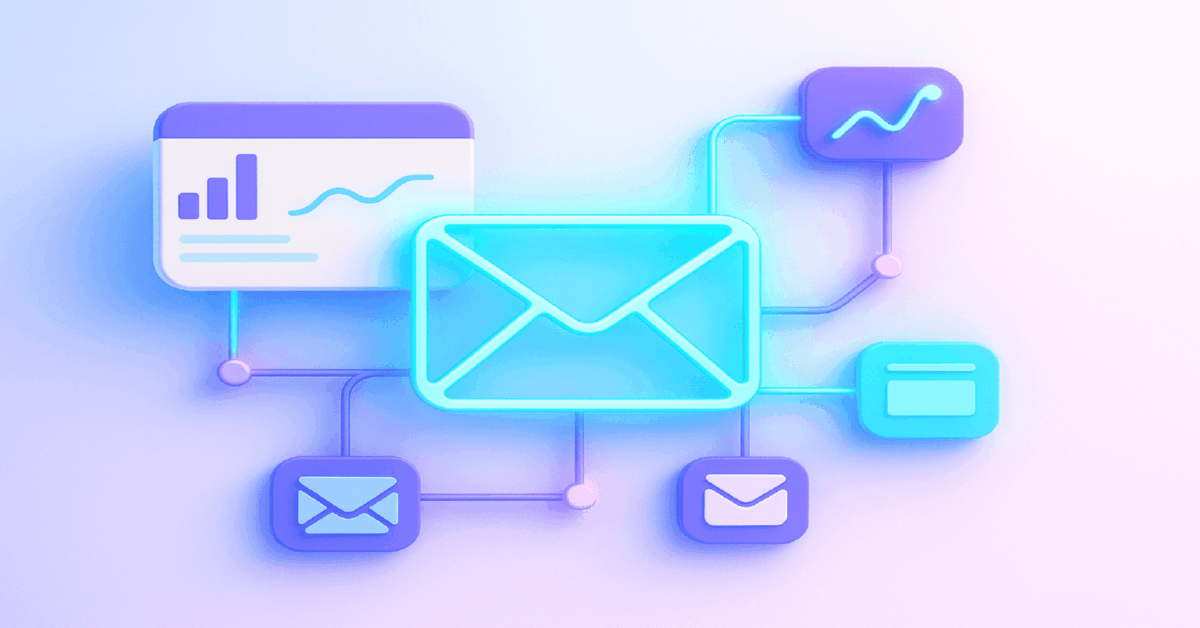


Summary:
- Defines automation for media buying: flows and triggers linking tracking, CRM and messaging, reacting to behaviour.
- Builds journeys that match ad intent: onboarding after lead capture, offer-specific follow-ups, and pricing visitors nudged without generic newsletters.
- Targets leakage and ops pain: paid traffic cools down, manual CSV segmentation and handoffs, plus deliverability fear after blasts.
- Recommends a base stack: welcome, abandoned step, abandoned cart/quote, post-purchase education with cross-sells, reactivation after 14–30 days inactivity.
- Details trigger hygiene: entry/progression/exit rules, event dictionary and required fields, dedup + cooldown, weekly 20–30 contact log replays.
- Adds control and proof: frequency caps with priorities, multichannel roles (email depth; SMS/push/messengers reminders), dashboards, holdout tests 7–14 days, revenue per contact.
Definition
Email automation for media buying in 2026 is an engineering-style revenue system where flows and triggers use tracking and CRM data to respond to real behaviour. In practice you map journeys, define entry/progression/exit triggers, enforce frequency caps and priorities, maintain an event dictionary with required fields, and validate impact with 7–14 day holdout cohorts. Done right, it reduces leakage between clicks and payment and makes revenue contribution measurable.
Table Of Contents
- What does email automation really mean for media buying in 2026
- Which pain points does email automation actually fix for performance teams
- How to design flows that actually move revenue
- Triggers from simple events to behavioural logic
- Multichannel orchestration email SMS push and messengers
- Deep dive the control room of your automation
Email automation in 2026 is not a side project that runs somewhere in the background It is a core revenue system that reacts to behaviour across channels and quietly pushes people toward meaningful actions without burning out the list Teams that win are not the ones with the fanciest templates but those with clear flows smart triggers solid data and a multichannel strategy that respects attention while protecting margins on every campaign If you are still mapping out the fundamentals of the channel it is worth reading a short overview of how email marketing works and why businesses rely on it before you start wiring complex automation
What does email automation really mean for media buying in 2026
For media buyers and performance teams email automation is a way to turn paid traffic into predictable cash flow instead of a series of random spikes You pay for impressions and clicks anyway so the real question is how many of those sessions get a second third and fourth chance to convert Automation connects your tracking setup CRM and messaging tools into flows that start and adapt automatically based on what people actually do rather than what you hope they will do
In practical terms this looks like a network of journeys A lead fills a form from a Google Ads campaign and gets a tailored onboarding sequence that reflects the promise of that ad group Someone clicks a creative about a specific offer and receives follow up focused exactly on that promise instead of a generic newsletter Visitors who reach pricing but do not sign up enter a gentle but persistent flow that answers objections and reduces friction You no longer rely on one shot landings and lucky timing every interaction gets a safety net
In English language marketing people usually call this marketing automation rather than talking about arbitrage However the logic for media buying is the same You invest in clicks and then need an infrastructure that collects opt ins warms people up and recovers revenue that would otherwise evaporate between ad click and payment When volumes grow it is often faster to work with dedicated pools of mailboxes for sending and testing so teams regularly source specialised email accounts for bulk operations and separate Gmail profiles for warmup and creative experiments
Which pain points does email automation actually fix for performance teams
The biggest pain is leakage between click and money Traffic is expensive attribution is messy and a lot of potential buyers disappear after the first session without leaving clear signals Without automation your team depends on occasional blasts and retargeting while a large share of leads simply cool down and never hear from you at the right moment
Another chronic problem is workload Manual segmentation exports endless CSV files coordination between marketers and sales and constant arguments about who can email which part of the database After a couple of aggressive blasts deliverability drops engagement falls and everyone becomes nervous about sending anything at all Email transforms from an asset into a risk button nobody wants to press
There is also the leadership angle Managers ask why spend on traffic keeps growing while lifetime value repeat orders and payback windows move only slightly Without an automated program it is very hard to show how each campaign contributes to long term revenue and how much money is lost in the gaps between sessions and follow ups Automation provides structure metrics and a story that finance teams can understand
How to design flows that actually move revenue
A strong flow is not just three emails sent over one week It is a structured hypothesis about what the person needs to see and feel at each stage of the journey from first contact to stable loyalty Every email inside the flow must have a clear job and must be linked to a specific behavioural moment otherwise it is decoration that steals attention without adding value
The starting point is always a map of journeys You can think about a journey from first click to first purchase another journey from first purchase to the second and third and a journey from early engagement to churn and possible comeback For each of these journeys you define the key events entry points delays tone voice and exit conditions Flows then become tools that support the reality of user behaviour not idealised funnels drawn in a slide deck
Core journeys you should map before adding complexity
Most media buying projects benefit from a similar base set of flows A welcome and onboarding flow right after subscription or lead capture explains who you are what promise brought the person in what will happen next and what value they can expect in the inbox An abandoned step flow follows people who started but did not finish a form a quote request or an application and removes friction by repeating key benefits and offering help An abandoned cart or quote flow works for strong intent and uses reminders simple incentives social proof and deadline framing without sounding desperate A post purchase flow stabilises the relationship reduces refunds educates on product use and introduces logical cross sells rather than throwing random offers at new buyers Finally a reactivation flow gives inactive contacts one last clear chance to re engage or quietly leave without harming deliverability If you want a more tactical breakdown of warming sequences from first touch to long term retention there is a focused guide on building warming up chains from welcome series into retention flows
| Approach | Manual blasts only | Basic automated flows | Advanced journey based program |
|---|---|---|---|
| Reaction speed after key events | Days or weeks after the fact | Same day reaction | Minutes after the action |
| Team workload over time | Constant high manual effort | Heavy during setup then moderate | Focused on monitoring and optimisation |
| Revenue stability from email | Irregular spikes around campaigns | Smoother recurring contribution | Predictable cohorts and payback windows |
| Segmentation and relevance | Same message for nearly everyone | Segments by activity source and interest | Behaviour journeys value based targeting |
Expert tip from npprteam.shop: Before drawing a complex flow chart open your performance reports and mark the points where you actually lose the most money leads who never reply carts that never close repeat orders that never happen and build flows for those exact breaks first everything else can wait.
Triggers from simple events to behavioural logic
Triggers are the switches that start move or stop flows They can be as simple as a new subscription or as refined as a combination of repeated visits product views and time since last interaction The level of care you put into trigger design directly affects how natural your messages feel and how long people stay engaged with your brand
At the basic level you have entry triggers such as form submitted email confirmed product purchased or specific page viewed Next you add progression triggers that move a person from one step of a flow to another for example clicking a key link downloading a resource or ignoring several messages in a row Finally you define exit triggers that remove a person from a flow when they already converted churned or moved to another relevant journey Without exit triggers people get stuck in irrelevant messaging and engagement decays fast To balance always on flows with larger campaigns it helps to understand bulk send mechanics so many teams rely on a deep dive into timing throttling batch sending and randomisation for mass email when designing their trigger strategy
Data hygiene and event design the invisible layer that decides whether triggers feel smart
In most real world programs the first thing that breaks is not copy or design but data hygiene. The same person can show up as two contacts, events arrive late, a CRM status changes after the fact, and time zones shift send windows. When this happens triggers start firing out of context and subscribers receive emails after they already converted which is one of the fastest paths to complaints and long term inbox placement damage.
A practical fix is to maintain a lightweight event dictionary with naming rules and a minimum set of required properties. If an event arrives without source campaign offer category lifecycle stage and last activity timestamp it should not be allowed to start revenue critical flows. Add dedup rules for repeated events and a clear cooldown per flow so one person cannot re enter the same journey every day. Also define ordering logic for late events for example purchase should always cancel abandoned cart even if the cart event arrives later.
A quick weekly QA routine works surprisingly well sample twenty to thirty contacts from different sources and replay their journey through logs. You will catch duplicates missing fields and misordered events before those issues scale into deliverability problems.
Preventing trigger chaos and subscriber fatigue
The most common failure pattern looks like this Every campaign owner adds new triggers for their own needs nobody maintains a central map and subscribers quietly end up inside several flows at once Inboxes fill with overlapping reminders and updates and even good content starts to feel like noise
The antidote is a clear contact policy You define a hard cap on marketing messages for example no more than one promotional email per day and no more than three per week not counting critical transactional messages Then you assign priorities to flows welcome and post purchase flows often sit near the top abandoned cart or quote flows also rank high while long term education streams sit lower When two triggers fire on the same day the system checks priorities and only the most important flow gets to send a message while the other waits or gets cancelled This keeps the signal to noise ratio healthy without requiring daily manual decisions
| Trigger type | Example condition | Suggested timing | Main objective |
|---|---|---|---|
| Abandoned step | Form started but not submitted | Thirty to sixty minutes after drop | Recover leads lost to friction or distraction |
| Abandoned cart or quote | Offer or items added no payment | First reminder after one to three hours then follow up after one to two days | Convert high intent visitors without aggressive pressure |
| Rising interest | Several visits to pricing or key product pages within a week | Within twenty four hours of last visit | Turn curiosity into a clear decision path |
| Inactivity | No opens or clicks for fourteen to thirty days | As soon as the threshold is reached | Either re engage or gracefully remove from regular sends |
Expert tip from npprteam.shop: If every new trigger only adds more volume instead of reallocating existing volume your program will eventually break people will react with spam complaints and algorithms will quietly hide even your best flows from the inbox.
Multichannel orchestration email SMS push and messengers
Multichannel logic means email does not fight with other touch points but acts as one instrument in a coordinated system Instead of sending the same message everywhere you decide which channel fits each moment and design messages that complement each other In this model email is usually responsible for depth while other channels work as short signals and reminders
Think about the journey of a high intent lead The first follow up might be a structured email with clear positioning proof and a simple call to continue the process A day later a messenger or SMS reminder can check in with a short status update or a deadline For customers who already bought a product one detailed onboarding email can be followed by quick push notifications that highlight key features at the right time The person experiences a coherent story instead of a random storm of pings
When to switch channels and when to stay in the inbox
Channel choice depends on urgency complexity and user preference If you need to explain pricing options answer objections or provide tutorials email is usually the best primary channel because it allows structured content that can be saved and re read If you need a fast confirmation or a last minute reminder short messages in SMS or messengers work better as long as you use them sparingly
Behavioural data helps to make these decisions If a contact consistently ignores emails but engages with ads or site visits you can test a multichannel nudge sequence where a light push or messenger message unlocks a click back to your content If another group regularly reads long newsletters and clicks deep links there is no reason to flood them with short alerts they already give attention in the inbox Over time you can ask people directly which channel they prefer for different types of communication and store that as an explicit preference in your data layer
| Scenario | Role of email | Role of other channels | Main risk to watch |
|---|---|---|---|
| Onboarding after lead capture | Deliver the promise explain next steps and set expectations | Occasional reminders about key actions in messengers or push | Overloading new leads before trust is formed |
| Closing high intent deals | Provide detailed proof breakdown of offers and answers to objections | Short reminders about deadlines or limited spots | Turning urgency into pressure and hurting brand perception |
| Reactivating cold contacts | Present a clear value based reason to return | Rare soft nudges in preferred channels | Triggering complaints by chasing people who clearly lost interest |
Expert tip from npprteam.shop: Multichannel does not mean repeating the same sentence in every possible app it means choosing the one place where the message has the highest chance to be welcomed and using other channels only when they add clarity or speed.
Deep dive the control room of your automation
Behind every visible flow there is an engineering layer where data structures rules and metrics live This is the control room that determines whether your program stays reliable at scale or slowly collapses under its own complexity Media buyers who understand this layer can talk to engineers and marketing ops on equal terms and push for changes that actually move numbers
The first pillar is a shared event and status vocabulary If your tracker CRM and automation platform all use different names for the same milestones your triggers will misfire and reports will contradict each other Agree on clear definitions for events such as lead created marketing qualified opportunity created deal won and churned and make sure they live in one internal dictionary that every system and every team uses
The second pillar is version control Flows evolve copy changes and business models shift Without version tracking you cannot match performance metrics to a specific set of emails or rules Even a simple naming convention with dates and purposes for each flow version gives you a way to understand which logic actually worked and which should never be reused
The third pillar is monitoring You need dashboards that show not only opens and clicks but also revenue per contact by flow contribution to payback time retention curves and alert signals like sudden drops in deliverability or spikes in complaints These metrics turn automation from a black box into a piece of infrastructure that can be maintained and improved like any other part of your stack For the technical side of this monitoring many teams lean on a dedicated playbook on log analysis Postmaster Tools metrics and domain reputation tracking to keep sending domains healthy while campaigns scale
Incrementality and attribution how to prove email is creating revenue not just taking credit
In 2026 the question is not whether a flow gets clicks but whether it produces incremental revenue. Last click reporting often overvalues retargeting and undervalues nurturing while open and click metrics measure attention rather than profit. The simplest way to settle the debate is to run holdout tests on your most important flows.
Pick a key journey such as abandoned cart onboarding or reactivation and exclude a small stable share of eligible contacts for seven to fourteen days. Then compare cohorts on conversion to purchase revenue per contact and payback speed not on email clicks. If the uplift holds while traffic quality stays stable you get a finance friendly story automation is not decoration it is measurable infrastructure. This also improves optimisation because you can see when multichannel nudges add real lift and when they simply duplicate other touches and increase noise.
A useful governance rule is to ship changes in small slices first any update to triggers timing or frequency should start on a limited share of traffic so you protect domain reputation while learning fast.
Which metrics show that a flow is healthy
Healthy flows combine technical engagement metrics with financial impact On the technical side you watch delivery rate open rate click rate time on site after click and device breakdown to understand how people actually consume your messages On the financial side you monitor revenue per subscriber within each cohort conversion rate from entry event to target event and incremental value compared with similar contacts who did not enter the flow
Risk metrics also matter Rising unsubscribe rates rising complaint rates and falling inbox placement tell you that your content frequency or targeting moved out of alignment with audience expectations If these numbers deteriorate while traffic quality stays stable it is a sign that the flow needs a rewrite rather than more volume Small tests within the existing structure can show whether the issue is timing message relevance channel choice or simply outdated promises
Email automation in 2026 has become an engineering discipline rather than a side skill for creative marketers When flows triggers and multichannel logic are designed around real user journeys media buying turns from a game of constant acquisition into a system that compounds value from every click Where teams still rely only on manual blasts and retargeting most of the budget disappears in the gaps between sessions Where there is a clear architecture and disciplined control of frequency almost every impression gets at least one more meaningful chance to turn into revenue and long term loyalty

Contests and sweepstakes without a "junk" audience on Instagram
Before you design mechanics, it helps to see the bigger performance picture. For a balanced take on what scales and...

Expertise without tediousness on Instagram: "we explain it on our fingers"
Expertise without boredom on Instagram in 2026 the plain language playbookExpertise online is clarity under pressure. In feeds and Reels...

How do I select communities (subreddits) for error-free displays on Reddit?
How to Choose Subreddits for Ads Without Missteps in 2026A "right" subreddit is not the largest one, but the one...


